
IPL vs. Laser Hair Removal: Which Is the Best Investment for You?

IPL vs. Laser Hair Removal: Which Is the Best Investment for You?
- IPL vs.
- Laser Hair Removal: Which Is the Best Investment for You?
- Choosing between IPL (Intense Pulsed Light) and laser hair removal involves weighing factors like skin tone, hair color, treatment area, and long-term cost, but for many, laser hair removal offers a more permanent and effective solution, especially for those with darker hair and lighter skin, making it a superior long-term investment in smooth skin.
- While IPL devices, often marketed as at-home tools for skincare, can reduce hair growth over time, they typically require more frequent sessions and may not achieve the same level of permanent reduction as professional laser treatments.
- For Sarah, who has struggled with unwanted hair for years and tried everything from waxing to depilatory creams, understanding the distinct mechanisms and suitability of each technology is crucial before committing to a significant investment in her beauty routine.
IPL vs. Laser Hair Removal: Which Is the Best Investment for You?
Choosing between IPL (Intense Pulsed Light) and laser hair removal involves weighing factors like skin tone, hair color, treatment area, and long-term cost, but for many, laser hair removal offers a more permanent and effective solution, especially for those with darker hair and lighter skin, making it a superior long-term investment in smooth skin. While IPL devices, often marketed as at-home tools for skincare, can reduce hair growth over time, they typically require more frequent sessions and may not achieve the same level of permanent reduction as professional laser treatments. For Sarah, who has struggled with unwanted hair for years and tried everything from waxing to depilatory creams, understanding the distinct mechanisms and suitability of each technology is crucial before committing to a significant investment in her beauty routine.
Key Insights
- Laser hair removal generally provides more permanent results and is highly effective for individuals with dark hair and light skin.
- IPL devices are versatile and can be used at home, offering a gradual reduction in hair growth, suitable for a wider range of hair and skin types, though often less potent than professional lasers.
- Consider your skin tone and hair color carefully, as these are primary determinants for the effectiveness and safety of both treatments.
- Cost and convenience vary significantly; IPL devices have a lower upfront cost but may incur more long-term expenses due to ongoing use, while laser treatments are more expensive per session but fewer sessions are typically needed.
- Both methods require multiple sessions to achieve desired results, targeting hair in its active growth phase.
The Science Behind the Shine: How Each Method Works
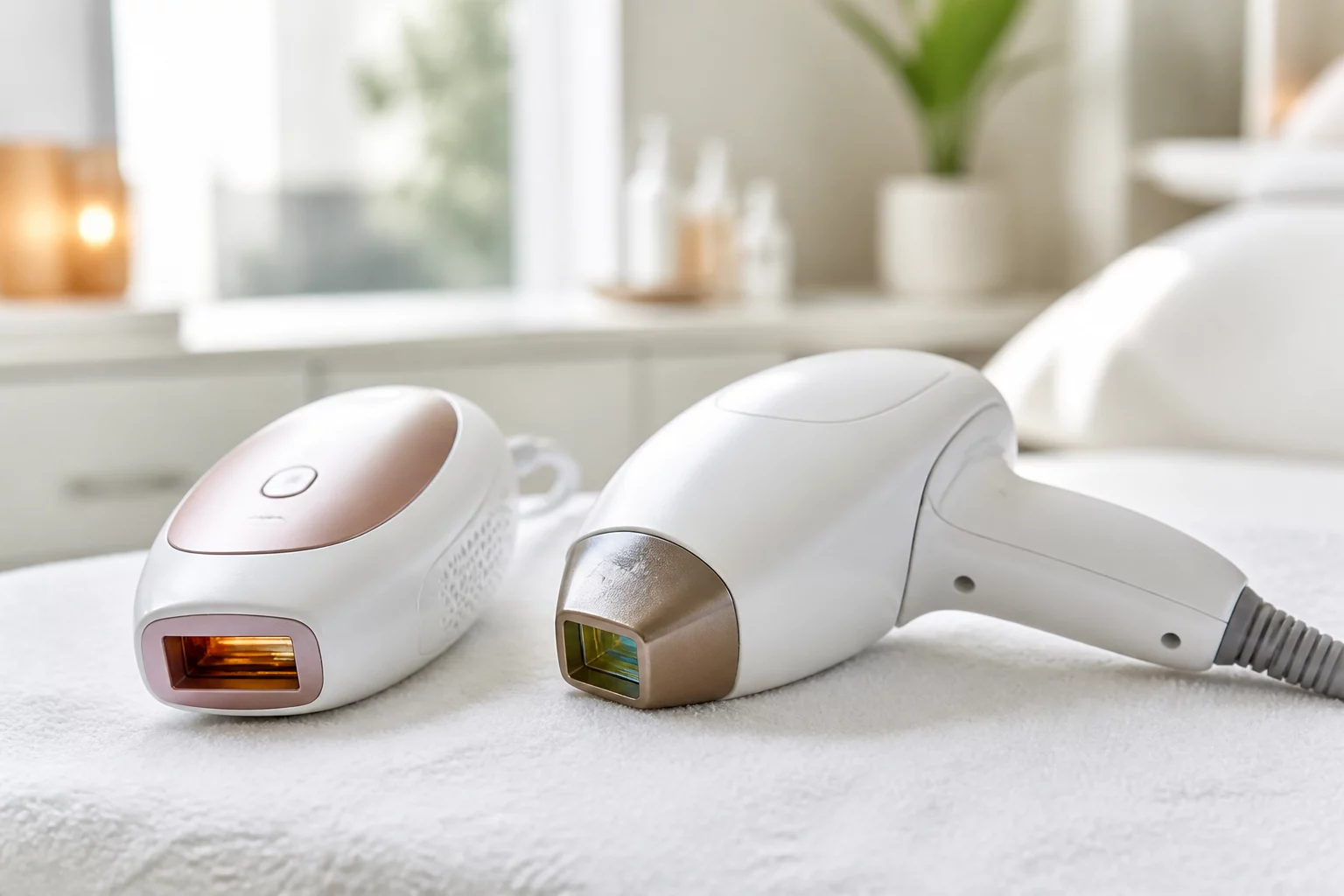
Understanding the fundamental differences in how IPL and laser hair removal operate is key to making an informed decision. Both technologies utilize light energy to target hair follicles, but they do so with distinct approaches. Laser hair removal employs a single, concentrated wavelength of light, precisely calibrated to be absorbed by the melanin (pigment) in the hair follicle. This focused energy converts to heat, damaging the follicle and inhibiting future hair growth. Because of its precision, laser treatment can target specific areas with high intensity, making it particularly effective for individuals with a strong contrast between their skin and hair color.
In contrast, IPL uses a broad spectrum of light, encompassing multiple wavelengths. This light is emitted in pulses, which are absorbed by melanin in the hair, similar to laser treatment. However, because IPL uses a broader spectrum, the light energy is more diffused and less concentrated than a laser. This characteristic makes IPL more versatile, as it can address a wider range of hair and skin types, albeit often requiring more sessions to achieve comparable results. The broader spectrum also means IPL devices can sometimes target other skin concerns, such as sun spots or uneven skin tone, making them multi-functional tools for at-home skincare enthusiasts.
Factors Influencing Effectiveness and Safety
The success and safety of both IPL and laser hair removal are heavily dependent on individual biological factors. Melanin, the pigment responsible for hair and skin color, plays a crucial role. Laser hair removal, with its precise targeting, is most effective when there’s a significant difference between the melanin in the hair and the melanin in the surrounding skin. For instance, someone with very dark hair and fair skin would typically see excellent results from laser treatment because the laser can efficiently target the dark pigment in the hair without significantly affecting the lighter skin.
Conversely, individuals with very light hair (blonde, red, grey) often find both methods less effective, as there isn’t enough melanin in the hair for the light energy to absorb and convert into heat. Similarly, those with darker skin tones face a higher risk of skin irritation or discoloration with both treatments, especially if the settings are not appropriately adjusted. This is because darker skin contains more melanin, which can absorb the light energy intended for the hair, leading to potential damage. Professional laser clinics often use advanced laser types, such as Nd:YAG lasers, which are safer and more effective for darker skin tones due to their longer wavelength, penetrating deeper into the skin without excessive melanin absorption in the epidermis.
Understanding Hair Growth Cycles
Both IPL and laser hair removal are most effective when hair is in its anagen (active growth) phase. Hair grows in cycles, and at any given time, only a percentage of hair follicles are in this active phase. This biological reality is why multiple treatment sessions are necessary for both methods. Each session targets the hair follicles that are actively growing at that particular time. Over a series of sessions, typically spaced several weeks apart, more and more follicles are treated as they enter their anagen phase, leading to a cumulative reduction in hair growth. Consistency with the treatment schedule is paramount to achieving the desired long-term results, regardless of the chosen method.
The number of sessions required for either IPL or laser hair removal varies significantly based on several factors, including the treatment area, hair density, hair color, skin type, and the specific device or laser used. Generally, professional laser hair removal treatments typically require 6 to 8 sessions to achieve substantial and lasting hair reduction. These sessions are usually spaced 4 to 6 weeks apart to align with the hair growth cycle, ensuring that as many follicles as possible are targeted during their anagen phase. For example, a common treatment plan for the underarms might involve 6 sessions over 6 months, with touch-up sessions potentially needed once a year or every few years to maintain results. The efficacy of these treatments is often high, with many individuals experiencing up to 80-90% permanent hair reduction after completing their initial series, as reported by industry data from as of 2023.
IPL treatments, particularly those performed with at-home devices, often necessitate a greater number of sessions to achieve similar levels of hair reduction. Users might need to perform treatments every week or two for the first 4 to 12 weeks, followed by monthly maintenance sessions. While the initial investment in an at-home IPL device is lower, the ongoing time commitment and the need for more frequent applications can add up. For instance, someone using an at-home IPL device for their legs might commit to 12 weekly sessions initially, then transition to monthly treatments for an indefinite period to sustain the results. The cumulative effect of these sessions gradually weakens the hair follicles, leading to finer, sparser hair over time. However, complete permanent removal is less commonly achieved with IPL compared to professional laser systems, which deliver more concentrated energy.
The long-term cost implications also differ between the two methods. While a single professional laser hair removal session can range from $100 to $500 depending on the area, the total cost for a full treatment series might be between $600 and $3,000. This upfront investment, however, often leads to a significant reduction in the need for future hair removal methods like shaving or waxing, potentially saving money over many years. In contrast, at-home IPL devices typically cost between $150 and $600. While seemingly more affordable initially, the need for ongoing cartridge replacements (if applicable) and the potential for less permanent results might mean continued spending on other hair removal products or even eventually opting for professional treatments. Therefore, when considering the best investment, it’s crucial to look beyond the immediate price tag and evaluate the total cost of ownership and the permanence of the results over a decade or more.
Making Your Informed Choice for Smooth Skin
Deciding between IPL and laser hair removal ultimately comes down to your personal priorities, budget, and specific hair and skin characteristics. If your primary goal is highly effective, long-term hair reduction with fewer sessions and you have a suitable hair and skin type (dark hair, light skin), professional laser hair removal is generally the superior investment. The precision and power of medical-grade lasers offer a more definitive solution, often leading to significant permanent hair loss after a completed course of treatment. Many clinics offer package deals for multiple sessions, which can make the overall cost more manageable, and the expertise of trained technicians minimizes risks and optimizes results. For example, a person with coarse, dark hair seeking to eliminate daily shaving of their bikini line would likely find laser treatment to be the most efficient and satisfying long-term solution, despite the higher per-session cost.
Conversely, if you’re looking for a more flexible, at-home solution that offers gradual hair reduction and perhaps addresses other minor skin concerns, an IPL device could be a suitable choice. These devices are user-friendly and allow for privacy and convenience, fitting into a busy schedule without requiring clinic appointments. They are also generally more forgiving for a wider range of hair and skin tones, though results may be less dramatic and require consistent, ongoing use. For someone with lighter brown hair who wants to reduce hair growth on their arms and is comfortable with a maintenance routine, an at-home IPL device provides a practical and accessible option. It’s important to manage expectations with IPL; while it can significantly reduce hair, it may not achieve the same level of permanent removal as professional laser treatments. Always ensure any at-home tools for skincare are FDA-cleared for safety and efficacy.
Before making a final decision, it is highly recommended to consult with a qualified professional, such as a dermatologist or a certified laser technician. They can assess your specific skin and hair type, discuss your goals, and recommend the most appropriate and safest treatment plan. Many clinics offer free consultations, providing an opportunity to ask questions, understand potential risks, and get a personalized estimate. This expert guidance is invaluable, especially given the significant investment of time and money involved in either method. Understanding the nuances of each technology and how it applies to your unique biological profile ensures you make the most effective and safest choice for your long-term beauty and skincare routine, avoiding potential disappointment or adverse effects.
Your Path to Lasting Smoothness
Considering the long-term benefits and personal suitability is key. Think about how much you currently spend on temporary hair removal methods annually, and project that over five to ten years. Often, the cumulative cost of waxing, shaving, or depilatory creams can surpass the investment in permanent reduction methods. Moreover, factor in the time saved and the convenience of not having to constantly manage unwanted hair. For many, the freedom from daily shaving or regular waxing appointments is a significant lifestyle improvement that justifies the initial outlay. Evaluate your comfort level with professional clinic visits versus the discipline required for consistent at-home treatments. Your commitment to the treatment schedule, regardless of the method, will heavily influence the final outcome.
Bottom Line: Laser hair removal is generally a superior long-term investment for permanent hair reduction, especially for those with dark hair and light skin, offering more effective and lasting results than IPL, which provides gradual reduction and is more suitable for at-home use and a wider range of hair and skin types.
Frequently Asked Questions
Is laser hair removal truly permanent?
Laser hair removal offers significant permanent hair reduction, typically 80-90% after a full course of treatments. While it doesn’t guarantee 100% removal, the remaining hair is usually much finer and lighter, requiring only occasional touch-up sessions.
Can IPL devices be used on all skin tones?
IPL devices are more versatile than traditional lasers for a wider range of skin tones, but caution is still advised for very dark skin. Darker skin contains more melanin, increasing the risk of burns or discoloration if settings are not adjusted correctly. Always check device compatibility.
How many sessions are typically needed for IPL versus laser?
Laser hair removal usually requires 6-8 professional sessions for optimal results. IPL, especially with at-home devices, often needs more sessions, sometimes 10-12 initially, followed by ongoing maintenance treatments to sustain hair reduction.
Is there a difference in pain levels between IPL and laser?
Both treatments involve some discomfort, often described as a rubber band snap. Laser treatments can feel more intense due to concentrated energy, but many modern devices include cooling features. IPL’s broader light spectrum can feel like a milder, warm sensation.